Wedding Playlist Curation: Beyond the DJ in 2026
Your wedding playlist is the invisible architecture of the entire celebration. Get it right and guests will talk about the dance floor for years. Get it wrong and even the most beautiful venue feels flat. In 2026, couples have more options than ever — from AI-curated playlists to hybrid DJ-plus-playlist setups — and the cost savings can be dramatic. Here's how to build a wedding soundtrack that rivals anything a professional DJ can deliver.
The Real Cost of Wedding Music in 2026
Before you decide between a DJ, a live band, or a DIY playlist, you need to understand what you're actually paying for.
Cost Breakdown by Option
| Option | Average Cost (2026) | What You Get |
|---|---|---|
| Professional DJ | $1,200–$3,000 | MC duties, crowd reading, equipment, 4–6 hours |
| Live Band | $3,000–$8,000+ | Live performance, ceremony + reception, 3–5 sets |
| DIY Playlist (Spotify/Apple Music) | $15–$30/month | Full control, zero talent fee, needs a good sound system |
| Hybrid (DJ + couple's playlist) | $800–$1,800 | DJ handles transitions, couple picks the songs |
According to The Knot's 2026 Real Weddings Study, the average couple spends $1,600 on music and entertainment. Couples who go the DIY route with a curated playlist save an average of $1,200 — money that goes straight back into the honeymoon fund.
When a DJ Is Worth Every Dollar
A DJ isn't just a music player. They're an MC, a crowd reader, and an energy manager. You should hire a professional if:
- Your wedding has 200+ guests with wildly different musical tastes
- You need someone to handle announcements, toasts, and introductions
- Your venue has complex sound requirements or noise ordinances
- You want seamless transitions between songs and moments
- You genuinely don't want to think about music on your wedding day
When a DIY Playlist Makes Sense
- You and your partner have a strong, shared musical identity
- Your guest count is under 150 (easier crowd to please)
- You have a friend who's willing to manage the playlist as a "playlist DJ"
- You're comfortable with a curated queue and a good Bluetooth speaker setup
- You want every song to be personally meaningful, not generic crowd-pleasers
Ceremony Music: Setting the Emotional Tone
The ceremony is where music does its heaviest emotional lifting. This is not the place for experimentation — it's the place for songs that make people feel something instantly.
The Processional
This is the moment the wedding party walks down the aisle. The music should build anticipation without overwhelming the moment.
Classic choices that never fail:
- "Canon in D" by Pachelbel — timeless, universally recognized
- "A Thousand Years" by Christina Perri — modern romantic
- "Clair de Lune" by Debussy — ethereal and emotional
- "Turning Page" by Sleeping at Last — intimate and cinematic
2026 trending picks:
- "Golden Hour" by JVKE — soft, cinematic, perfect for slow walks
- " Until I Found You" by Stephen Sanchez — vintage romance energy
- "Sunset Lover" by Petit Biscuit — instrumental, dreamy, modern
The Recessional
This is the joyful exit. The energy should spike. Think triumphant, celebratory, upbeat.
Can't-miss recessional songs:
- "Signed, Sealed, Delivered" by Stevie Wonder
- "Best Day of My Life" by American Authors
- "You Make My Dreams" by Hall & Oates
- "On Top of the World" by Imagine Dragons
Pro Tip: Test Your Ceremony Music at the Venue
Sound behaves differently in open fields versus stone chapels. Play your ceremony playlist at the venue at the same time of day, and listen from where guests will sit. Adjust volume and song length accordingly.
Cocktail Hour: The Art of Background Vibe
Cocktail hour music should be sophisticated enough to feel intentional but unobtrusive enough to let conversation flow. This is background music at its finest.
The ideal cocktail hour playlist includes:
- Jazz standards (Miles Davis, Ella Fitzgerald, Chet Baker)
- Bossa nova (Antonio Carlos Jobim, Lisa Ono)
- Indie folk (Iron & Wine, Bon Iver, Hozier)
- Acoustic covers of pop songs (Nina Simone's "Feeling Good")
Volume rule: Guests should be able to have a normal conversation without raising their voices. If you're using a smart speaker, set it to 40–50% volume and test it with two people talking three feet apart.
Reception Dinner: Building the Energy
Dinner music is the bridge between the elegant ceremony and the high-energy dance party. Start low and build gradually.
The Energy Arc
First 30 minutes (appetizers/arrival): Soft, conversational
- Soul, R&B, classic rock ballads
- Artists: Etta James, Otis Redding, Fleetwood Mac
Middle section (main course): Moderate energy
- Pop classics, Motown, soft rock
- Artists: Stevie Wonder, The Beatles, Elton John
Final 30 minutes (dessert/toasts): Building anticipation
- Upbeat soul, funk, feel-good classics
- Artists: Earth, Wind & Fire, Prince, Michael Jackson
The Dinner Playlist Formula
Aim for this ratio:
- 40% songs everyone knows (universal appeal)
- 30% personal favorites (your story as a couple)
- 20% genre-specific gems (your shared taste)
- 10% wild cards (unexpected picks that surprise and delight)
Dance Floor Progression: The Night's Main Event
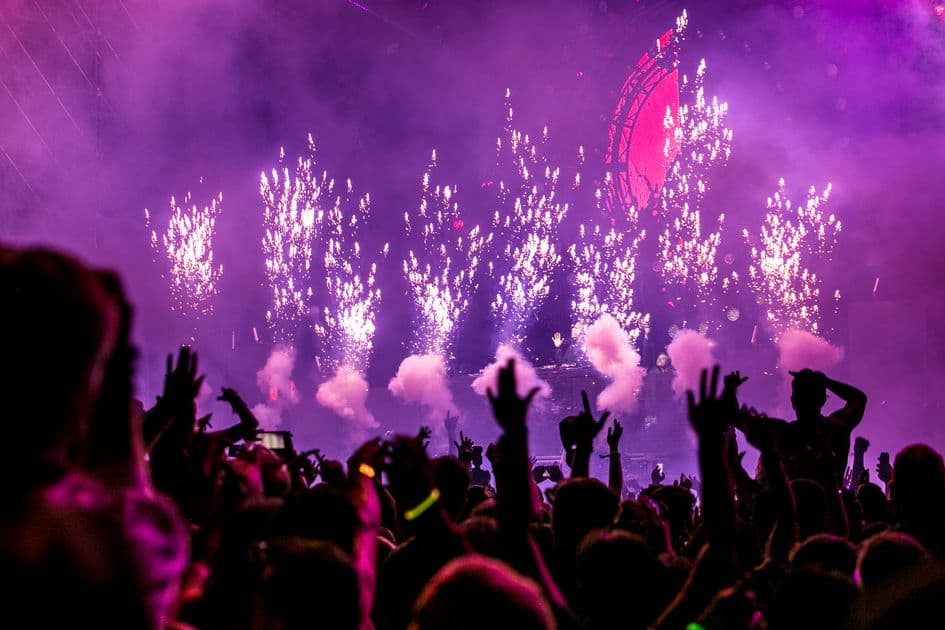
This is where your playlist lives or dies. The dance floor follows a predictable energy curve, and your playlist should mirror it.
Phase 1: The Soft Open (First 30 Minutes)
Guests are still finding their courage. Play familiar, mid-tempo songs that make people sway more than stomp.
- "I Gotta Feeling" by The Black Eyed Peas
- "Crazy in Love" by Beyoncé
- "Shut Up and Dance" by Walk the Moon
- "Uptown Funk" by Bruno Mars
Phase 2: Building Momentum (30–60 Minutes)
The dance floor is filling up. Energy climbs steadily.
- "Livin' on a Prayer" by Bon Jovi
- "Wannabe" by Spice Girls
- "Mr. Brightside" by The Killers
- "Yeah!" by Usher
Phase 3: Peak Energy (60–90 Minutes)
This is the apex. Every song should be a certified banger.
- "Don't Stop Believin'" by Journey
- "Shout" by The Isley Brothers
- "September" by Earth, Wind & Fire
- "Dancing Queen" by ABBA
Phase 4: The Wind-Down and Last Song
Bring the energy down gradually. End with something emotional and memorable.
- "Wonderful Tonight" by Eric Clapton
- "At Last" by Etta James
- "I Don't Want to Miss a Thing" by Aerosmith
- Or repeat your first dance song for symmetry
Spotify vs. Apple Music vs. YouTube Music for Weddings
Each streaming platform has pros and cons for wedding use.
Spotify
Pros: Collaborative playlists, offline downloads, crossfade feature, DJ-friendly interface Cons: Free tier has ads (you need Premium at $11.99/month), some songs missing due to licensing Best feature: Crossfade — set it to 8–12 seconds for seamless transitions between songs
Apple Music
Pros: Higher audio quality (lossless), tight integration with iPhone and CarPlay Cons: No collaborative playlists (as of mid-2026), smaller social sharing features Best for: Couples who are deep in the Apple ecosystem
YouTube Music
Pros: Largest song catalog, music videos available, free tier is more generous Cons: Audio quality varies, no crossfade, ads on free tier Best for: Finding obscure tracks and live recordings
Building a Collaborative Wedding Playlist
One of the best wedding playlist strategies is letting guests contribute — within boundaries.
How to Do It Right
- Create a shared playlist on Spotify and add the link to your wedding website
- Set ground rules: "One song per guest. Keep it danceable. No 'Free Bird.'"
- Curate ruthlessly: Remove duplicates and songs that don't fit the vibe
- Create a "do not play" list: Songs you absolutely do not want (looking at you, "Chicken Dance")
- Preview together: Sit down with your partner and listen through the full queue before the wedding
Wedflip's Playlist Feature
Platforms like Wedflip make collaborative playlist management even easier by integrating song requests directly into your wedding website. Guests can submit song requests alongside their RSVP, giving you a single dashboard to manage music preferences alongside seating charts and dietary needs. It turns what used to be scattered text messages and group chat chaos into one organized system.
The Technical Setup: Sound System Essentials
A great playlist deserves great sound. Here's what you need.
Equipment Checklist
- Speaker system: Two powered speakers (JBL Eon or QSC K series) for 100–200 guests. Budget $300–$600 for rental.
- Mixer: A simple 4-channel mixer for connecting multiple devices. Budget $50–$100 rental.
- Backup device: A second phone or tablet loaded with the same playlist, fully charged.
- Cables: Extra aux cables, Lightning-to-3.5mm adapters, USB-C adapters.
- Extension cords and power strips: More than you think you need.
Volume Guidelines
- Ceremony: 50–60 dB (conversational level)
- Cocktail hour: 60–70 dB (background music)
- Dinner: 65–75 dB (comfortable but present)
- Dance floor: 80–90 dB (energizing, not painful)
The "Do Not Play" List Is Non-Negotiable
Every wedding has that one guest who shouts "PLAY 'CHOP SUEY'!" at 10 PM. Protect your playlist with a clear do-not-play list.
Classic wedding do-not-plays:
- "Macarena" — it had its moment, and it's over
- "Chicken Dance" — unless you're being ironic
- "Cotton Eye Joe" — same energy, different decade
- "We Built This City" — objectively the worst song ever recorded
- Anything by Nickelback (controversial, but statistically accurate)
Share this list with whoever is managing the playlist. Put it on a sticky note on the laptop. Tattoo it on your forearm if necessary.
Final Checklist: 48 Hours Before the Wedding
- Full playlist downloaded offline on primary device
- Backup playlist downloaded offline on secondary device
- Both devices charged to 100%
- Crossfade set to 8–12 seconds
- Volume tested at the venue
- "Do not play" list shared with playlist manager
- Song request list curated and loaded
- Emergency phone charger packed
- Sound check scheduled with venue coordinator
The Bottom Line
Your wedding playlist is one of the highest-impact, lowest-cost decisions you'll make during planning. Whether you hire a DJ, book a live band, or go fully DIY with Spotify and a great speaker setup, the key is intentionality. Every song should earn its place. Build the playlist together, test it in the actual space, and give someone the job of managing it on the day so you can focus on what matters — being present with the person you love.
Tools like Wedflip help you centralize your wedding planning so that details like music requests, guest preferences, and vendor coordination all live in one place instead of scattered across a dozen apps. When your planning is organized, your wedding day is stress-free — and that includes the music.