The Personalized Wedding Revolution: How Vietnamese Couples Are Rewriting Every Rule in 2026
Something fundamental is shifting in how Vietnamese couples approach their wedding day. The grand banquet hall with 500 guests and a karaoke stage isn't going away — but a growing number of couples are choosing something radically different. And what they're creating is extraordinary.
The 2026 wedding season across Vietnam isn't defined by a single trend. It's defined by a mindset: this day should feel like us, not like everyone else's wedding.
That mindset is producing ceremonies that range from 20-person beach gatherings in Quy Nhơn to bilingual vow exchanges in Đà Lạt gardens to zero-waste celebrations that would have been unthinkable five years ago. The common thread isn't a style — it's intentionality.
The Rise of the Intimate Wedding
The most significant shift is scale. A growing number of Vietnamese couples — particularly in Ho Chi Minh City and Hanoi — are choosing guest lists under 80 people. Some go as low as 20.
This isn't about budget constraints. Many of these couples could afford a 300-person banquet. They're choosing intimacy deliberately because it changes the fundamental nature of the day.
"We had 35 guests. I danced with every single person. I had a real conversation with every single person. My parents' wedding had 400 guests and my mom says she didn't eat a single bite all night because she was greeting people. I wanted the opposite of that." — Hạnh, married in Hội An, 2025
What Changes With a Small Guest List
- Emotional depth. When every person in the room is someone you genuinely love, the energy is different. Vow exchanges hit differently when your grandmother is three feet away, not 30 tables back.
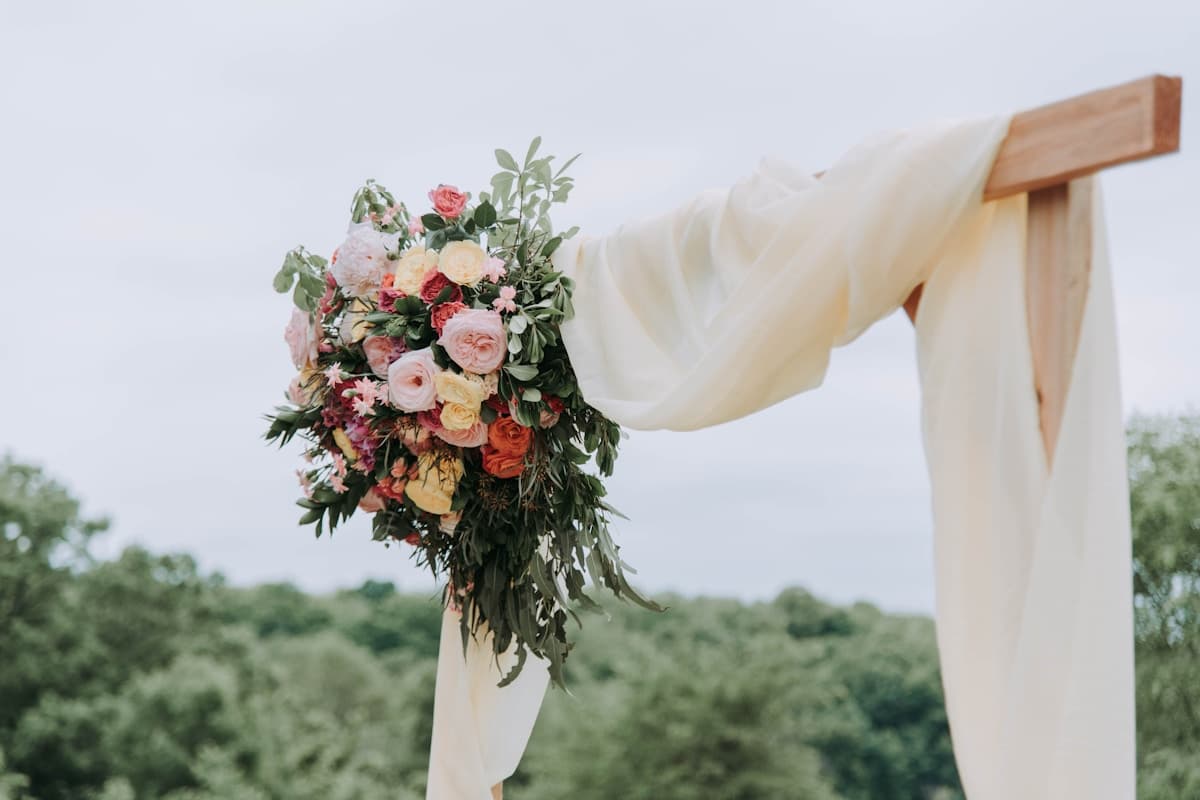
- Budget reallocation. Spending $50,000 on 300 guests means $167 per person. The same budget for 50 guests means $1,000 per person — suddenly you can afford the imported wine, the live jazz trio, the floral arch that stops hearts.
- Time with your people. The math is simple. Eight hours of reception divided by 300 guests means 1.6 minutes each. Divided by 50 guests: nearly 10 minutes each. That's the difference between a handshake and a memory.
Destination Weddings: Vietnam's Natural Advantage
Vietnam's geography is steadily making it one of Asia's most compelling destination wedding locations — for both Vietnamese couples and international ones.
The Hottest Locations in 2026
Quy Nhơn has emerged as the dark horse of Vietnamese destination weddings. Less crowded than Đà Nẵng, more affordable than Phú Quốc, with stunning coastal cliffs and boutique resorts that feel genuinely private.
Đà Lạt remains the go-to for couples who want lush greenery, cool mountain air, and a European-village atmosphere without leaving Vietnam. The pine forests and flower fields produce wedding photos that look like they were shot in Provence.
Hội An continues its reign for couples who want ancient architecture, lantern-lit streets, and the kind of golden-hour light that makes photographers weep. The old town provides a backdrop that no amount of decor could replicate.
Phú Quốc attracts couples who want a full wedding-weekend experience — beach ceremony Friday, pool party Saturday, sunset reception Sunday — with enough resort infrastructure to house every guest.
The Destination Wedding as Relationship Filter
An underappreciated benefit of destination weddings: they naturally filter your guest list. When attending requires a flight and hotel stay, only the people who genuinely want to celebrate with you will come. The obligatory invites self-select out. What remains is a room full of people who chose to be there — and the energy of that room is electric.
Personalization: From Theme to Testimony
The word "personalization" gets thrown around a lot in wedding media. But what Vietnamese couples are doing in 2026 goes far beyond custom cocktails and monogrammed napkins.
The Rituals That Didn't Exist Before
First Look. Borrowed from Western tradition but adapted with Vietnamese emotional sensibility, the private First Look — where the couple sees each other in wedding attire before the ceremony — has become one of the most photographed moments in Vietnamese weddings. For couples who grew up with the tradition of not seeing each other before the ceremony, deliberately breaking this rule creates an intensely intimate moment.
Personal Vow Exchanges. The traditional Vietnamese ceremony is communal and familial — beautiful, but the couple rarely speaks directly to each other. A growing number of couples are adding a personal vow exchange after the tea ceremony, creating a moment of direct address that older family members often say is the most moving thing they've witnessed at a wedding. (We wrote about this in depth here.)
Already planning your personalized wedding? Try Wedflip's AI planning assistant to organize your timeline, budget, and guest list — so you can focus on the details that make it yours.
Couple-Narrated Ceremonies. Instead of a generic MC walking through a scripted program, some couples are pre-recording personal narration that plays during key moments — their voice telling their own story as guests watch a slideshow or as the couple enters. It's vulnerable, specific, and unforgettable.
Design That Tells Your Story
The best wedding designs in 2026 don't follow trends — they translate the couple's actual life into visual language.
- A couple who met over coffee designed their entire reception around a specialty coffee bar, with each table named after a coffee origin they'd traveled to together.
- A marine biologist and architect used coral reef patterns in their invitation suite and served a locally-sourced seafood tower as the centerpiece course.
- Two musicians replaced a DJ with a curated playlist of songs from every significant moment in their relationship, with program notes explaining each choice.
The principle: the most memorable weddings are the ones where guests learn something new about the couple by being there.
A bilingual wedding website is one of the highest-impact personalization decisions you can make — and with Wedflip, it takes minutes, not weeks. Your ceremony in Vietnamese, your travel details in English, your RSVP in both.
The Eco-Conscious Wedding Movement
Sustainability has moved from "nice to have" to "core value" for a significant segment of Vietnamese couples — particularly those under 35.
What Eco-Friendly Actually Looks Like
- Floral choices: Dried flowers, locally grown seasonal blooms, and potted plants that guests take home instead of cut arrangements that hit the trash the next day.
- Stationery: Digital invitations with QR codes linking to the wedding website. For couples who want physical elements, seed paper that guests can plant.
- Catering: Locally sourced, seasonal menus. Minimized food waste through precise RSVP-based headcounts. Compostable servingware for outdoor ceremonies.
- Fashion: Vintage or rented áo dài. Gowns from sustainable designers. Engagement rings from ethical gem sources.
Pro tip: A wedding website makes the paperless approach seamless — RSVP, directions, accommodation, registry all in one place, eliminating the need for multiple paper mailings entirely.
The Minimalist Aesthetic
Closely related to sustainability: the minimalist wedding aesthetic is one of the strongest visual trends in 2026. Monochromatic color palettes — all white, all sage, all terracotta — create stunning visual coherence. The approach works because it forces restraint, and restraint always photographs beautifully.
Key elements:
- Single-variety floral arrangements (all orchids, all baby's breath, all pampas grass)
- Clean typography on stationery and signage
- Neutral-toned linens with subtle texture variation
- Architectural venues that need minimal decoration
The Wedding Content Creator Phenomenon
Perhaps the most 2026 trend of all: hiring a dedicated content creator alongside (not instead of) a traditional photographer/videographer.
The role is different from a photographer's. A content creator captures behind-the-scenes moments, candid reactions, getting-ready chaos, and guest interactions — all formatted for TikTok, Instagram Reels, and Stories. The content is delivered within 24–48 hours, often same-day.
Why it works: traditional wedding photography produces heirloom-quality images delivered in 8–12 weeks. Content creation produces shareable, immediate, emotionally raw documentation that extends the celebration to everyone who couldn't be there.
What This All Points To
The 2026 Vietnamese wedding isn't defined by what it looks like. It's defined by what it feels like — to the couple, to their families, to every person in the room.
The couples getting it right aren't following trends. They're asking better questions: What do we actually want to feel on this day? What do we want our guests to feel? What will we remember in 30 years?
The answers to those questions are always personal. And personal weddings — by definition — can't be templated. They can only be created.
Your Wedding Is One of a Kind. Your Website Should Be Too.
You've chosen the guest list with intention. Designed the ceremony around your story. Selected every detail to feel like you.
Your wedding website should carry that same intentionality — bilingual, beautifully designed, and built to handle RSVPs, travel details, and every piece of information your guests need.